
October 29, 2025


Running a business while supporting a family requires thoughtful financial planning. Self-employed households often experience variable income, greater responsibility for taxes, and fewer employer-sponsored benefits than traditional employees. Building a reliable financial strategy helps families manage uncertainty while creating a stronger foundation for both personal and business success.

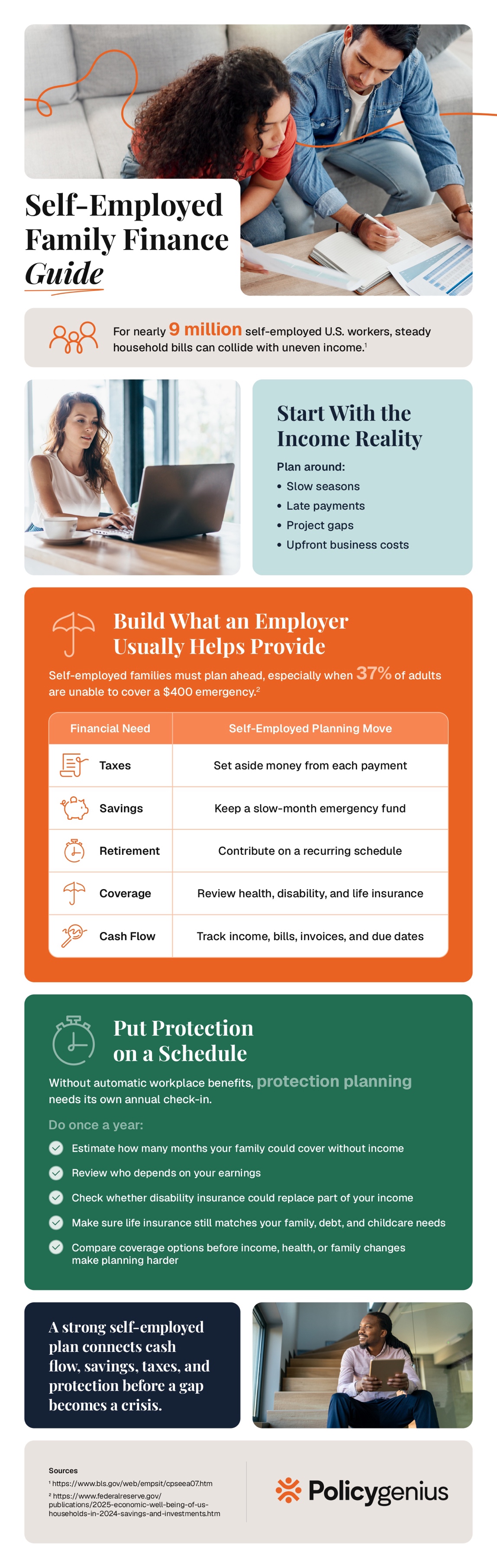
Monthly earnings may fluctuate because of seasonal demand, client payments, or business growth. Instead of creating a budget based on the highest earning months, calculate an average monthly income using the previous year's financial records.
Essential household expenses should be prioritized before any discretionary spending. During stronger revenue periods, setting aside additional savings helps offset slower months without disrupting the family budget.
Reviewing income and expenses every month also helps identify spending patterns that can be adjusted as business needs evolve. A written monthly spending plan also gives every family member a clearer picture of shared financial priorities.
Keeping business and household finances separate improves financial organization and simplifies tax preparation. Dedicated business bank accounts and credit cards make it easier to monitor operating expenses while reducing confusion during bookkeeping.
Maintaining accurate financial records also helps business owners evaluate profitability, prepare financial statements, and make informed decisions about future investments, which is where professional financial planning support often pays for itself. Accounting software can streamline expense tracking while providing a clearer picture of overall financial performance. Regular recordkeeping also saves time when meeting with accountants or preparing annual tax filings.
Unlike traditional employees, self-employed individuals are generally responsible for setting aside funds for estimated tax payments throughout the year. Reserving a percentage of each payment received helps reduce financial stress when taxes are due, a habit worth building early as any side hustle starts making money.
Families should also review insurance needs as part of a broader financial plan. Comparing life insurance quotes online can help identify coverage that protects loved ones while fitting within the household budget. Coverage should be reviewed periodically as income, business obligations, and family responsibilities change over time. Professional advice from accountants or financial advisors may also help improve tax planning and long-term financial decision-making.
Emergency savings remain especially important for self-employed families because business income can change unexpectedly. Many financial professionals recommend maintaining several months of living expenses in an easily accessible emergency fund.
Retirement planning should also remain a priority. Self-employed individuals have access to several retirement savings options that may provide tax advantages while supporting long-term financial security.
Contributing consistently, even during slower business periods, helps create steady progress over time. Reviewing retirement goals each year helps keep savings aligned with changing family and business needs.
Financial success for self-employed families depends on preparation rather than prediction. A realistic budget, organized financial records, emergency savings, tax planning, insurance protection, and retirement contributions all work together to strengthen financial stability. Reviewing these areas regularly allows families to adapt as business conditions change while creating greater confidence in both their personal finances and long-term business goals. To learn more, feel free to look over the accompanying infographic below.
Work from an average monthly figure based on the previous year rather than your best months, and treat surplus in strong periods as cover for slower ones.
A fixed percentage of each payment received, put aside as it arrives. The right percentage depends on your circumstances, so it is worth confirming with an accountant.
It makes bookkeeping cleaner, tax preparation faster and profitability easier to judge. Mixed accounts obscure how the business is actually performing.
Many financial professionals suggest several months of living expenses. Variable income generally argues for the higher end of whatever range you are considering.
Consistency usually beats intensity. Smaller regular contributions maintained through quieter months tend to compound better than occasional large ones.
