
July 25, 2025

Choosing a room for a corporate event involves more than finding a space large enough for the guest count. A ballroom, conference room, and auditorium may accommodate similar numbers of people in certain configurations, yet produce very different final costs.
Comparing those operational differences early can prevent an attractive rental rate from becoming an expensive surprise.

Ballrooms work well for conferences, awards dinners, company celebrations, and other events that require substantial flexibility. Open floor plans can accommodate dining tables, stages, presentation areas, or multiple seating arrangements.
That flexibility often creates additional expenses. A large room may need staging and more audiovisual equipment so attendees can see and hear speakers clearly. Lighting can also require more attention, particularly when the event includes presentations, entertainment, or video recording.
Labor matters as well. Changing a ballroom from classroom-style seating during a daytime meeting to banquet seating for dinner can require a significant reset between sessions. The cost of that transition should be included when comparing venues.
Traditional conference rooms are generally better suited to executive meetings, workshops, training sessions, and smaller presentations. Many already contain tables, chairs, screens, and basic conferencing technology, reducing the amount of equipment that must be brought into the space.
Their limitations can still affect the budget. A room built for 30 people may become uncomfortable at its maximum stated capacity once equipment, catering stations, or additional staff are added. Booking a slightly larger room can sometimes be more practical.
Hybrid meetings introduce another consideration. A screen and webcam may be sufficient for a basic call, but an event with remote speakers or a larger virtual audience may require better technical support.
Auditoriums provide fixed seating and clear sightlines, making them useful for presentations, company meetings, panel discussions, and educational programs. Since chairs and staging may already be installed, businesses can avoid some setup costs associated with an empty event space.
Production requirements can become more significant, however. Speakers need to be heard throughout the room, presentations must remain visible from distant seats, and transitions between presenters need to happen smoothly. Organizations may use event production services when the program requires professional sound, lighting, video, or technical coordination.
Conferences and training events often require several smaller rooms in addition to the main meeting space. These breakout rooms can increase costs faster than expected because each may need its own screen, supplies, signage, refreshments, or technical equipment.
Scheduling can reduce some of that expense. If breakout sessions occur at different times, equipment may be moved between rooms rather than duplicated. That approach depends on having enough transition time and staff to handle the change efficiently.
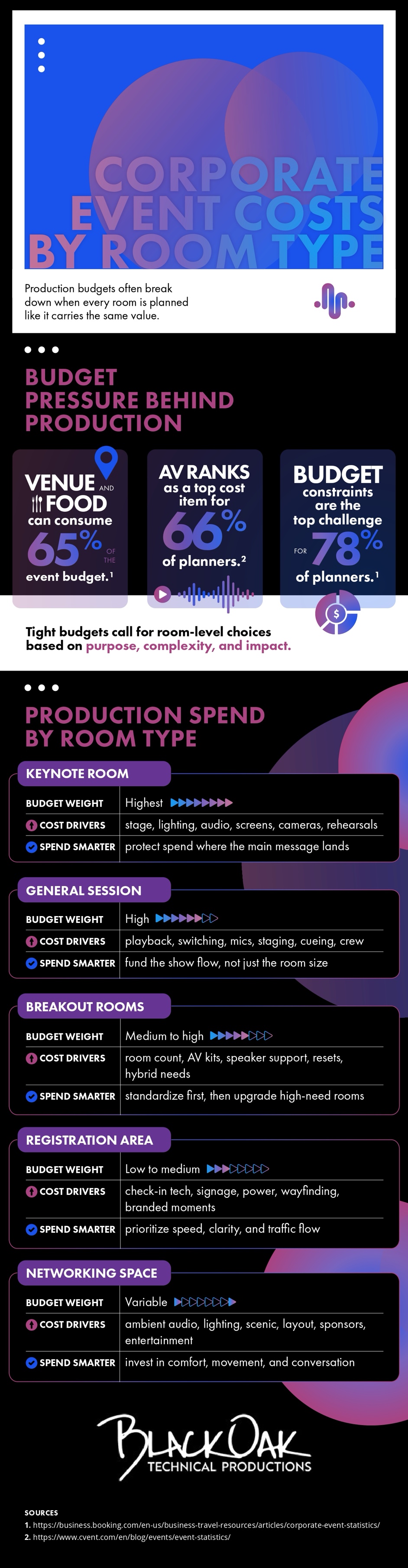
Corporate event budgeting works best when room selection is based on how the space will actually be used. Rental price is only one part of the calculation. Setup labor, production requirements, catering logistics, technology, and room changes can materially alter the final bill. Look over the infographic below for more information.
Because the rental fee excludes most of the operational spend. Setup labor, audiovisual equipment, lighting, catering logistics and mid-event room resets all vary by room type and can move the final bill considerably.
When the event genuinely needs flexibility, such as a conference that moves between presentation, dining and awards formats. If the format is fixed, a room already configured for it is usually cheaper.
Room resets. Changing a space from classroom seating during the day to banquet seating for dinner is a significant labor cost that often is not quoted alongside the rental rate.
Usually not. Stated capacity rarely accounts for equipment, catering stations and additional staff. A room rated for 30 can feel cramped well before it reaches that number in practice.
Each breakout room may need its own screen, signage, refreshments and technical kit, so costs rise quickly. Staggering sessions so equipment can move between rooms reduces duplication, provided there is enough transition time.