
May 6, 2025

Workplace performance is shaped by more than policies and technology. Visual and auditory environments influence focus, comfort, and collaboration every day. When sight and sound are considered intentionally, offices become places where people think clearly, communicate better, and feel more at ease during long work hours.


Visual conditions affect attention span and mental energy. Poor lighting, glare, or visual clutter can increase fatigue and reduce concentration. Balanced illumination helps employees stay alert without strain, especially during screen-heavy tasks.
Natural light plays a central role. Exposure to daylight supports healthy sleep patterns and improves mood, which directly impacts productivity. Where daylight is limited, layered lighting that combines ambient and task lighting offers consistency throughout the day. Clean sightlines, organized layouts, and calm color palettes further reduce cognitive overload.
Ceiling design also contributes to the visual experience. Features such as a Hatch ceiling can integrate lighting, ventilation, and acoustic elements while maintaining a streamlined appearance. This type of integration supports function without adding visual noise to the space.
Sound is often overlooked until it becomes disruptive. Open offices, shared workspaces, and hybrid layouts introduce a mix of conversations, equipment noise, and digital alerts. Without control, these sounds interfere with focus and increase stress.
Effective acoustic design balances collaboration with quiet. Sound-absorbing materials, ceiling panels, and soft finishes reduce echo and background noise. Designated quiet zones allow for deep work, while enclosed meeting areas contain conversations that would otherwise spill into shared spaces.
Background sound also matters. Low-level ambient noise or sound masking can reduce distractions by smoothing sudden changes in volume. When managed well, sound becomes a stabilizing element rather than a constant interruption.
Sight and sound influence how teams interact. Clear visibility in meeting rooms encourages engagement, while proper acoustics ensure everyone can participate without strain. Poor sound quality leads to repeated questions, misunderstandings, and disegagement.
Technology should complement the sensory environment. Video conferencing tools, displays, and speakers perform best when lighting avoids glare and acoustics limit feedback or distortion. Thoughtful design ensures technology enhances communication instead of creating friction.
Extended exposure to harsh lighting or constant noise contributes to mental fatigue. Over time, this affects morale, focus, and job satisfaction. A workplace that respects sensory needs signals care for employee wellbeing.
Offering choice helps. Adjustable lighting, varied work zones, and flexible seating allow individuals to select environments that match their tasks and preferences. This autonomy supports both comfort and performance.
Workplace needs change as teams grow and work styles shift. Sensory design should allow for adjustment without major disruption. Modular lighting systems, movable acoustic elements, and adaptable layouts support ongoing improvement.
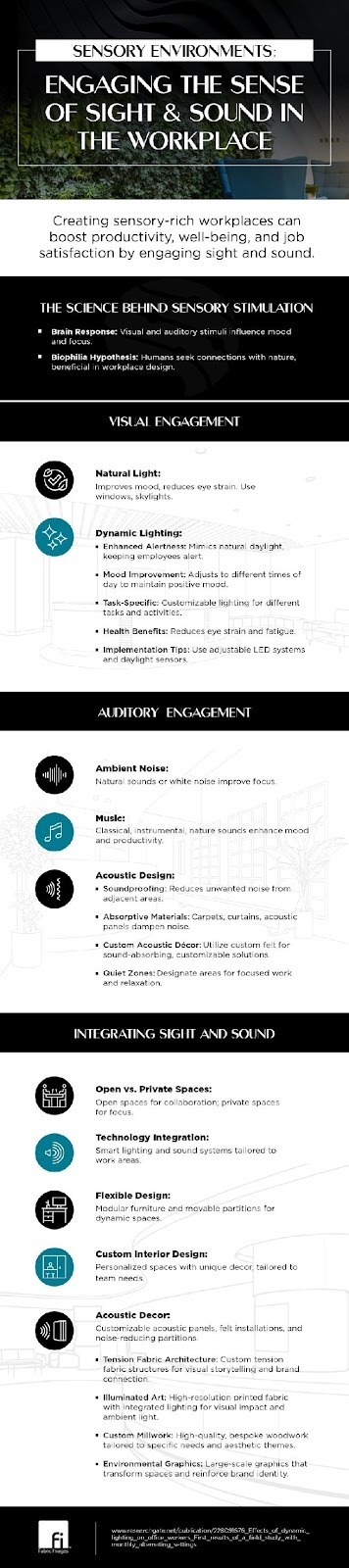
Engaging sight and sound is not about aesthetics alone. It is about creating conditions where people can think, collaborate, and perform at their best. When visual clarity and acoustic balance work together, the workplace becomes a more effective and supportive environment for everyone. Look over the infographic below for more information.
Poor lighting can cause significant eye strain and mental fatigue, making it difficult for you to concentrate. A well-lit space, particularly one with access to natural daylight, can improve your mood, support healthy sleep patterns, and help you stay alert and focused.
In an open office, the mix of conversations, equipment sounds, and digital alerts creates a constant auditory backdrop. Without effective acoustic management, these sounds interrupt your train of thought, interfere with deep work, and can increase your stress levels.
Yes, it can. When meeting rooms have clear lines of sight and excellent acoustics, it ensures everyone can see and hear clearly. This prevents misunderstandings and encourages better engagement, making your collaborative sessions much more productive.
Sound masking is the process of adding a low-level, unobtrusive background sound to an environment. This engineered sound helps to cover up sudden, distracting noises, like distant conversations, making them less noticeable and helping you maintain focus on your tasks.
If natural light is scarce, you can use a layered lighting approach. This combines general ambient lighting with specific task lighting for your desk. Using calm colour palettes and keeping your workspace organised also helps reduce visual clutter and cognitive load.
