October 27, 2025

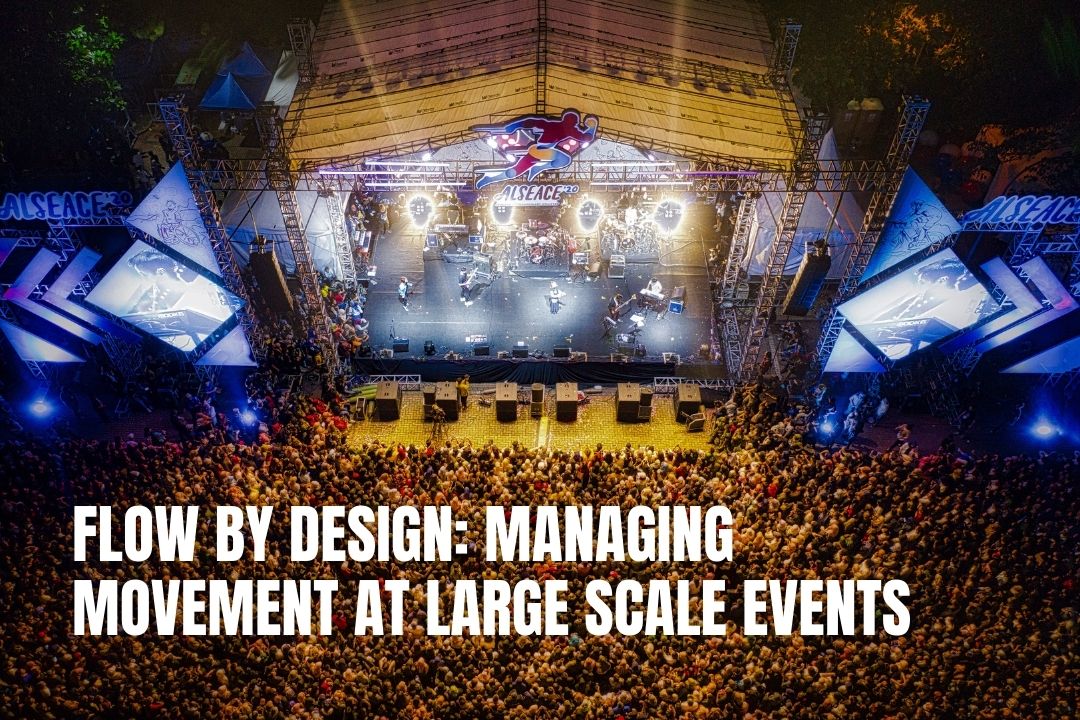
Large gatherings create energy, visibility, and opportunity for organizations. They also introduce logistical pressure. When crowd flow is poorly managed, congestion, frustration, and safety risks follow. Effective planning focuses on how people move through space, how decisions are made in real time, and how environments influence behavior. Crowd flow optimization requires structured design, operational discipline, and continuous monitoring.

Successful crowd management begins with clear spatial mapping. Event planners must assess entry points, exit routes, corridors, seating areas, and vendor zones. Each section should have defined capacity limits that align with fire codes and safety standards.
Predicting peak movement periods improves preparation. Entry surges often occur shortly before programming begins, while exits create concentrated traffic at closing times. Designing one-way routes, expanding key walkways, and separating entry and exit paths reduce cross traffic and bottlenecks.
Zoning also supports smoother movement. High-interest attractions placed too close together can create congestion. Distributing activities across the venue spreads foot traffic more evenly and encourages natural circulation.
People rely on visual information to make movement decisions. Clear signage reduces hesitation and confusion. Directional markers should be legible from a distance and placed at decision points such as intersections or stairways.
Environmental signals shape behavior. Lighting, color coding, and themed markers can guide attendees subconsciously. For example, outdoor church banners positioned near entrances or gathering areas can function as both branding elements and directional cues during community events.
Open sight lines also improve flow. When attendees can see their destination, they are less likely to pause or cluster. Obstructed views often slow movement and increase anxiety.
Even well-designed layouts require human oversight. Staff positioned at key intersections can redirect traffic or respond quickly to developing congestion. Training should emphasize observation skills and calm communication.
Crowd density should be monitored continuously. Visual observation combined with camera feeds or digital counters provides early warnings of unsafe conditions. When congestion appears, teams can open alternative routes or temporarily restrict access to specific zones.
Communication tools support coordination. Mobile radios or centralized command centers allow rapid response without creating visible disruption.
Data-driven planning improves long-term outcomes. Ticket scans, attendance analytics, and movement tracking reveal patterns that inform future layouts. Post-event reviews help identify friction points and opportunities for adjustment.
Event apps can distribute traffic by notifying attendees of shorter lines or less crowded entrances. Digital signage can display real-time updates that guide movement.
Technology should support operational awareness without overwhelming attendees. Clear, concise information fosters cooperation and trust.
Optimizing crowd flow involves thoughtful design, active management, and continuous improvement. Large gatherings succeed when attendees move confidently and safely through the environment. Organizations that prioritize structured planning and responsive oversight reduce risk while creating a positive experience for participants. Effective crowd management is not an afterthought. It is a core component of event strategy and brand reputation. For more information on optimizing crowd flow, feel free to look over the accompanying infographic below.

You should begin with detailed spatial planning. Map your entire venue, including all entry and exit points, walkways, and activity zones. Establishing clear capacity limits for each area is also a critical early step to ensure safety and smooth movement.
You can reduce congestion by designing one-way traffic routes, making sure key walkways are wide enough, and keeping entry and exit paths separate. Spreading out popular attractions also helps to distribute foot traffic more evenly across the venue.
While clear signage is essential, you can also use environmental signals. Things like specific lighting, colour-coded areas, and even themed markers can subconsciously guide people, creating a smoother flow without them even realising it.
Technology offers powerful tools for managing movement. Event apps can send notifications to guide attendees to less crowded areas, while digital signage provides real-time updates on queues or access routes. Post-event, analytics from systems like those from Beacon Inside can reveal traffic patterns to improve future events.
Real-time monitoring allows your team to spot and address potential congestion before it becomes a problem. Using staff observation, cameras, or digital counters, you can quickly open alternative routes or redirect attendees to maintain a safe and pleasant environment for everyone.