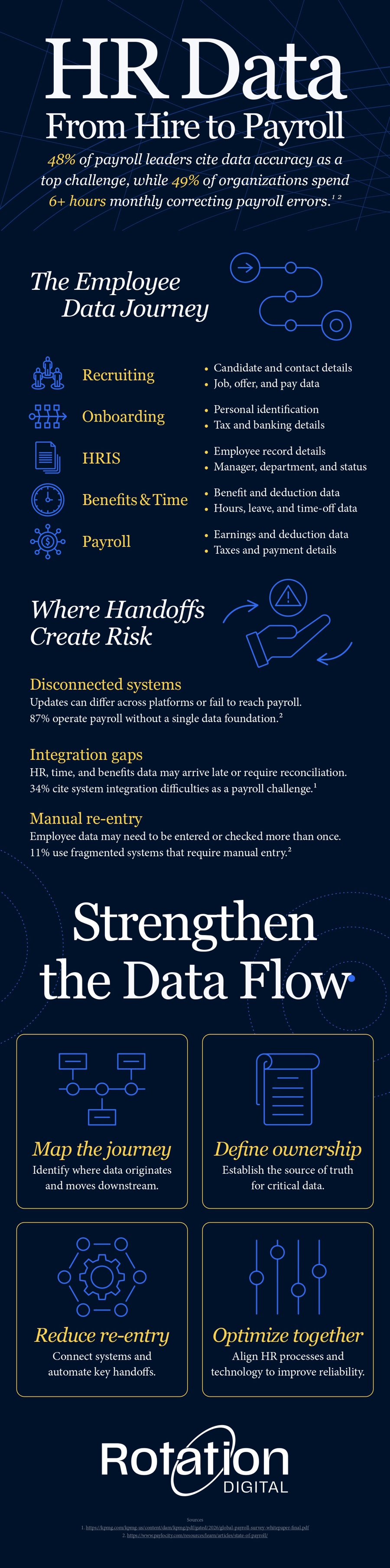
Employee information passes through several business systems before a new hire receives their first paycheck. Recruitment platforms, HR databases, timekeeping software, and payroll applications all depend on accurate records. When information becomes inconsistent, businesses risk payment errors, compliance problems, and unnecessary administrative work. Managing employee data throughout this process requires clear procedures, reliable technology, and coordination between departments.

The process begins when candidates submit applications containing contact details, employment histories, and qualifications. Once an offer is accepted, relevant information must move into the company’s employee records.
Manual transfers can introduce errors, including incorrect names, duplicate profiles, or inaccurate start dates. Businesses should establish standardized data fields and verify essential information before creating permanent employee records.
Onboarding introduces additional information that directly affects compensation. Tax withholding forms, direct deposit instructions, employment classifications, and benefit elections must be recorded correctly.
An incorrect employment classification can affect overtime calculations, while missing banking information may delay payment. HR departments should establish verification procedures and confirm that required records are complete before the first payroll deadline. Automated transfers can reduce repetitive data entry. However, employees still need to review exceptions and resolve conflicting information.
Accurate payroll depends on reliable timekeeping records, particularly for hourly employees. Missing punches, unapproved overtime, and incorrect leave balances can produce compensation discrepancies.
Managers should review employee hours before payroll processing begins. Clear approval procedures help prevent unauthorized adjustments and identify errors while they can still be corrected. Salary increases, promotions, and changes in employment status also require timely updates. Delayed communication between departments can result in incorrect payments.
Businesses often use separate applications for recruitment, employee management, benefits, and payroll. When these platforms operate independently, staff members may enter identical information multiple times.
HR technology consulting can help organizations evaluate software compatibility, identify inefficient workflows, and establish appropriate integration requirements.
However, connecting systems does not automatically guarantee accurate information. Companies must determine which platform maintains authoritative records and establish procedures for resolving discrepancies. Regular audits can identify failed transfers, duplicate profiles, and outdated employee details.
Before issuing payments, payroll teams should reconcile compensation records against approved hours, salary changes, and benefit deductions. Reviewing unusual transactions can reveal mistakes involving new hires, terminated employees, or unexpected overtime.
Access permissions should also reflect employee responsibilities. Sensitive payroll information must remain protected from unauthorized viewing or modification. Documented approval procedures create accountability and support internal financial reviews.
Employee information continues changing after onboarding. Address updates, benefit modifications, promotions, and departures must be reflected across relevant systems.
Periodic record reviews help identify inconsistencies before they affect compensation or reporting. Businesses should also maintain appropriate retention schedules and remove unnecessary system access when employees leave.
Reliable HR data management supports accurate payments, efficient administration, and informed workforce decisions. These practices help organizations maintain employee confidence while improving operational performance. Look over the infographic below for more information.