
December 2, 2025


Compensation is one of the largest expenses in most organizations. Despite its importance, many companies rely on fragmented processes to manage commissions, bonuses, and incentive payouts. Spreadsheets, manual approvals, and disconnected systems may appear manageable at first, but inefficiencies accumulate quickly. The financial and cultural costs often extend beyond payroll errors.


Manual compensation workflows consume significant time. Finance, HR, and sales operations teams often spend hours reconciling data from multiple sources. When compensation plans are complex, even small adjustments require extensive recalculation and review.
These inefficiencies translate into labor costs. Time spent correcting errors or tracking approvals reduces capacity for strategic initiatives. Delays in payout processing can create additional administrative work as employees request clarification.
Error rates also increase when processes rely heavily on manual data entry. Incorrect commission calculations, misapplied rates, or missing adjustments require remediation. Each correction introduces further cost and potential reputational damage within the workforce.
Compensation plans influence performance. When workflows are unclear or slow, sales teams may lose confidence in the system. Uncertainty about earnings can affect motivation and focus.
Delayed or inaccurate commission payments create frustration. Sales professionals who question the reliability of payout calculations may redirect energy toward verifying compensation rather than closing deals. Over time, trust erodes.
Inconsistent data also limits leadership insight. Without reliable reporting, managers struggle to assess the effectiveness of incentive plans. Adjustments become reactive rather than data-driven, which can reduce overall revenue growth.
Compensation processes intersect with legal and regulatory obligations. Inaccurate reporting can expose organizations to compliance risk, particularly in industries with strict compensation guidelines.
Manual documentation increases the likelihood of incomplete audit trails. If disputes arise, companies may lack clear records to support their calculations. Governance standards require transparency and accuracy, both of which depend on structured workflows.
Organizations pursuing digital transformation often address these concerns during broader SPM implementation initiatives. Integrating compensation management within formal systems reduces risk and improves oversight.
Employee Experience and Retention
Compensation influences employee satisfaction. Transparent processes and predictable payouts reinforce fairness. When workflows are inefficient, communication gaps emerge.
Employees who repeatedly question commission statements or bonus calculations may perceive inequity, even if errors are unintentional. Over time, dissatisfaction can contribute to turnover.
Clear dashboards, accessible reports, and timely approvals strengthen confidence. When employees trust that compensation aligns with performance, engagement increases.
Inefficient workflows also carry an opportunity cost. Leadership attention devoted to resolving payout disputes detracts from strategic planning. Finance teams absorbed in manual reconciliation cannot focus on forecasting or incentive optimization.
Modern compensation strategies require agility. Adjusting incentive structures in response to market shifts demands accurate, real-time data. Fragmented systems hinder this responsiveness.
Addressing inefficiencies requires more than incremental adjustments. Structured processes, integrated data, and clear accountability create a foundation for reliable compensation management.
Compensation workflows shape financial outcomes, employee morale, and organizational credibility. Inefficiencies create hidden costs that extend beyond administrative inconvenience. Check out the accompanying infographic below for more information.
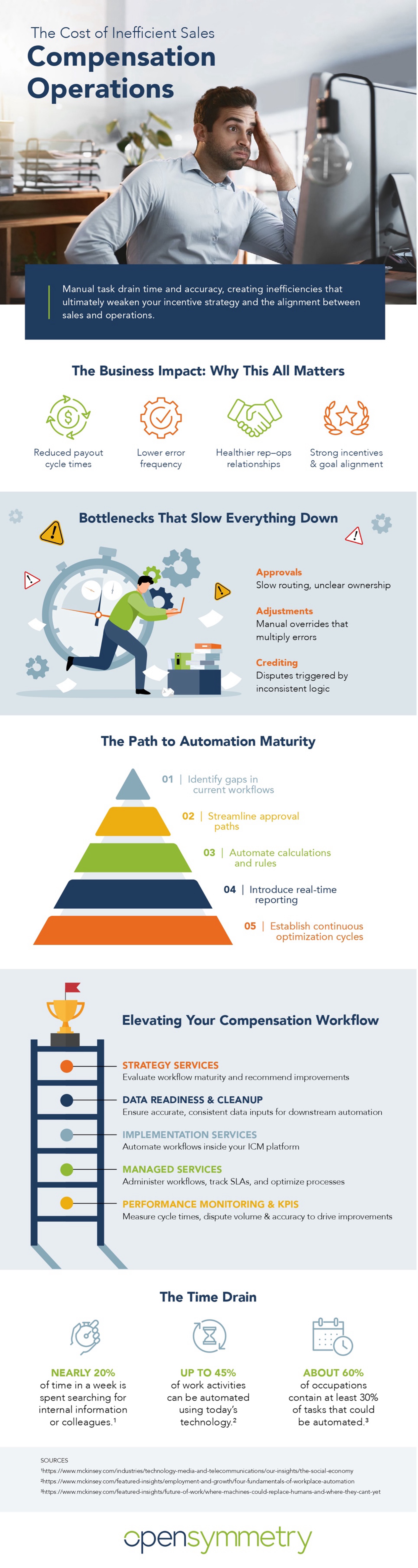
The primary hidden costs include wasted administrative hours, increased payroll errors, lower sales team motivation leading to lost revenue, higher compliance risks, and poor employee morale which can increase staff turnover.
When employees frequently encounter errors or delays in their pay, they can lose trust in the company. This perception of unfairness or incompetence damages morale and is a significant factor that can drive talented people to seek opportunities elsewhere.
Yes, they can. Manual systems increase the risk of inaccurate reporting and incomplete audit trails. This can expose your organisation to compliance violations and make it difficult to defend your calculations in case of a legal dispute with an employee.
Fragmented systems prevent you from getting a clear, real-time view of performance data. Without reliable reporting, your leadership cannot accurately assess which incentive plans are working, making it difficult to make data-driven adjustments to drive growth.