October 14, 2025

Rising costs have changed how wellness brands think about packaging. Inflation affects everything from raw materials to transportation, and packaging sits at the center of those pressures. For businesses operating in health, packaging decisions now balance cost control more carefully than ever.


Inflation has driven up the price of paper, plastics, glass, and aluminum. As a result, wellness brands are reassessing material selection. Lightweight packaging, thinner gauges, and alternative substrates are gaining attention because they reduce material usage without sacrificing function.
Many companies are shifting away from heavy, rigid formats in favor of flexible or hybrid solutions that cost less to produce and ship. These changes help offset rising expenses while maintaining protection for sensitive products such as supplements, skincare, and medical-adjacent goods.
Packaging inflation is not limited to materials alone. Energy prices, labor shortages, and transportation costs all affect timelines and budgets. Wellness brands are responding by simplifying packaging structures and reducing the number of components per unit.
Fewer layers, standardized sizes, and modular designs streamline production and minimize delays. These adjustments allow businesses to maintain a consistent supply even when external conditions remain unpredictable.
Despite cost pressures, wellness packaging must continue to meet strict safety and compliance standards. This is especially true for products that interact with health systems or vulnerable consumers. Cost reduction efforts cannot compromise labeling accuracy, tamper evidence, or material safety.
Brands must still invest in clear instructions, dosage information, and warnings. For many companies, this includes careful sourcing of labels for healthcare that meet durability and readability requirements under real-world conditions, such as moisture, handling, and repeated use.
Inflation has also influenced how consumers view packaging. Shoppers are more price aware, but they still associate quality packaging with product integrity. Wellness brands face the challenge of controlling costs without making products feel cheap or unreliable.
Clean design, clear messaging, and functional features such as resealable closures or portion control help maintain perceived value. Transparency about packaging choices can also build trust, especially when brands explain why materials or formats have changed.
Sustainability goals remain important, but inflation has complicated their execution. Recycled and compostable materials can carry higher upfront costs, forcing brands to prioritize where sustainability investments matter most.
Some businesses are focusing on reduced material usage rather than premium eco-materials. Others are adopting packaging formats that lower carbon impact through lighter weight and more efficient shipping. These steps align environmental responsibility with financial realism.
Inflation often accelerates innovation. Wellness packaging teams are experimenting with smarter designs that deliver protection, compliance, and brand clarity at lower cost. Digital printing, shorter production runs, and regional sourcing all support this shift.
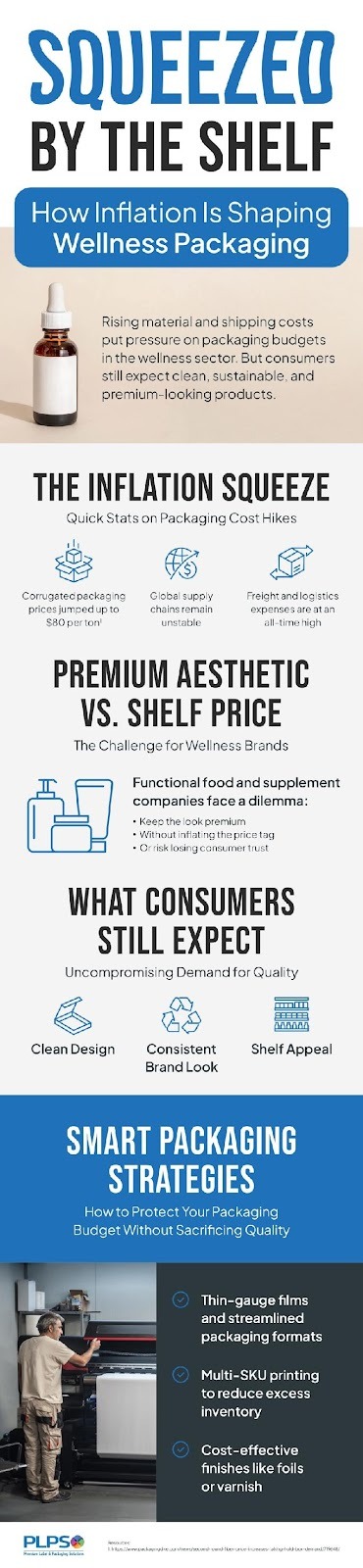
Inflation has changed the rules for wellness packaging, but it has not eliminated opportunity. The brands that succeed will treat packaging as a strategic asset rather than a fixed expense, adjusting thoughtfully as economic conditions continue to evolve. Check out the infographic below for more information.
Inflation is causing brands to reconsider traditional materials. You'll find many are shifting to more cost-effective options like lightweight plastics, thinner glass, and flexible pouches. The main goal is to reduce material usage and shipping weight while ensuring the product remains protected.
Yes, you must. While simplifying designs helps manage expenses, your packaging must still meet all safety and compliance requirements. Accurate labelling, tamper-evident seals, and material safety are non-negotiable in the wellness industry, so cost-saving measures cannot compromise them.
Not necessarily. The key is to make smart changes. You can maintain a premium feel through clean design, clear messaging, and functional features like resealable closures. Being transparent with your customers about why you've made changes can also build trust and preserve your brand's value.
Since premium eco-friendly materials can be costly, a practical approach is to focus on reduction. Using less material overall, or choosing lighter packaging that reduces carbon emissions during transport, aligns environmental goals with financial realities. This is a strategy many brands, including those using solutions from Beacon Inside, are adopting.