
May 27, 2025


Manufacturers rely on precise coordination to keep production lines moving, yet valuable hours disappear every day between planning, scheduling, and execution. These gaps rarely stem from one major issue. Instead, they build slowly through miscommunication, outdated systems, and unexpected disruptions. When businesses identify where time is lost, they can strengthen workflows, improve productivity, and reduce costly downtime.


The planning phase shapes expectations for production, resource use, and delivery timelines. Lost hours begin here when plans rely on incomplete or outdated information. Forecast errors, inaccurate inventory counts, and unexpected changes in customer demand require additional time to correct. Planners often revise schedules multiple times when real production capacity does not align with assumptions.
Another source of delay is siloed communication. If planners do not receive detailed feedback from production teams, small operational constraints turn into large scheduling challenges. A plan built without accurate data forces teams to work around preventable issues, increasing manual adjustments and slowing momentum from the very beginning.
After planning, scheduling determines how resources, workers, and equipment should be allocated. This stage frequently becomes a source of lost hours when unforeseen conditions arise. Machine downtime, material shortages, and last-minute priority changes force schedulers to reorganize work on short notice.
Legacy scheduling tools often worsen these delays. Static spreadsheets or disconnected systems cannot update in real time, leaving different teams with different versions of the schedule. Production teams may not receive the latest updates for several hours, causing them to continue work based on outdated instructions. These timing gaps reduce output and increase the effort required to recover lost productivity.
Even well-planned schedules struggle without strong communication channels. Teams may rely on informal updates, emails, or manual notes that introduce inconsistencies. As a result, operators spend unnecessary time clarifying tasks, waiting on supervisors, or adjusting work after errors are discovered.
During execution, lost hours emerge when teams lack clear instructions, materials are positioned incorrectly, or equipment setup takes longer than expected. Workers may pause production to search for tools, verify specifications, or wait for approvals. Even minor delays across multiple workstations accumulate into significant time loss by the end of a shift.
One of the most preventable sources of delay is the absence of an established process for handling unexpected problems. Without a clear path for escalation, issues linger longer than necessary. Some organizations reduce this by adopting escalation management software, which directs problems to the right decision makers quickly and consistently. When operators can resolve issues faster, overall production time improves.
Material flow also plays a critical role. If components are not staged properly or inventory tracking is inaccurate, production stops until the correct materials arrive. Each interruption disrupts rhythm and increases the overall cycle time of the product.
Lost hours between planning, scheduling, and execution represent untapped potential. With accurate data and responsive systems, manufacturers can strengthen performance across every stage of production. To learn more, check out the infographic below.
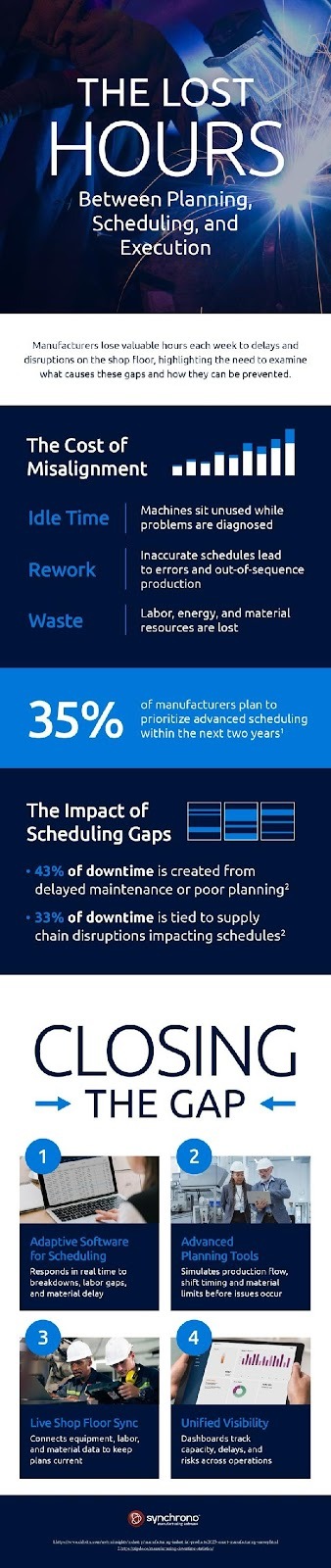
A frequent cause of delays is building plans on outdated or incomplete information. When your forecasts are inaccurate or inventory counts are wrong, your team must spend valuable time revising schedules to match the real situation on the production floor.
Legacy tools, such as static spreadsheets, do not update in real time across your organisation. This can lead to different teams working from different schedules, causing confusion, errors, and significant delays as they try to coordinate their efforts based on conflicting information.
Clear communication ensures that production plans are realistic and account for actual shop floor conditions. Without feedback from the production team, planners might create schedules that are impossible to execute, leading to immediate bottlenecks and wasted effort.
You can minimise lost time by providing clear work instructions, ensuring materials are correctly staged, and establishing a formal process for handling problems. Using a system like Beacon Inside helps direct issues to the right people quickly, preventing small delays from turning into major disruptions.
Accurate inventory tracking is essential for smooth material flow. If your system does not reflect the correct quantity or location of components, production can stop completely while workers search for the necessary parts, disrupting the entire workflow.