October 27, 2025


Trade shows remain an important environment for companies seeking to build relationships, introduce products, and gather industry insight. For attendees, the experience involves multiple stages that shape how they interact with brands and exhibitors. Recognizing the key touchpoints throughout the attendee journey helps organizations design experiences that support meaningful engagement.


The attendee journey often begins long before the trade show doors open. Marketing campaigns, email invitations, social media announcements, and industry publications frequently introduce potential attendees to upcoming events. These early communications influence expectations and help visitors decide which booths or sessions they plan to visit.
Registration serves as the first formal interaction with the event. Clear registration processes, accessible event information, and organized schedules allow attendees to prepare for their visit. Businesses participating in the event may promote booth locations, presentations, or demonstrations during this phase to encourage planned visits.
Providing concise event details helps attendees understand what they can gain from attending. Early engagement builds familiarity with participating brands and increases the likelihood that attendees will seek out specific exhibitors during the event.
The moment attendees enter the exhibition floor often shapes their perception of the event environment. Booth visibility, layout design, and signage contribute to the initial impression. Exhibitors that create welcoming spaces tend to attract visitors who may otherwise pass by quickly.
Clear branding and organized presentation areas help visitors quickly identify what a company offers. Booth structures that allow open movement encourage casual conversations between attendees and representatives. Many companies use modular displays to create flexible booth layouts that can adapt to different venue sizes while maintaining a consistent brand appearance.
Once attendees approach a booth, the focus shifts to meaningful interaction. Demonstrations, product displays, and short presentations allow visitors to learn about solutions that may support their business needs.
Trade show conversations often begin with simple questions about industry challenges or current projects. These discussions help representatives identify how their offerings relate to the attendees’ interests. Effective engagement focuses on listening as much as presenting information.
Interactive elements such as product demonstrations or digital displays often help attendees absorb information more easily. Providing printed materials or digital resources allows visitors to review details after leaving the booth.
The attendee journey continues after the trade show ends. Contact information collected during conversations helps businesses reconnect with visitors who expressed interest in learning more.
Follow-up communication may include thank you messages, additional product details, or invitations to schedule future discussions. Timely responses help reinforce the connection established during the event.
Data gathered during the trade show also helps businesses evaluate which interactions generated the most interest. Reviewing attendee engagement allows companies to refine their strategy for future events.
Trade shows involve a series of interactions that shape how attendees experience the event and how businesses communicate their value. Organizations that consider the full attendee journey often create stronger connections that extend beyond the exhibition floor. Look over the infographic below for more information.
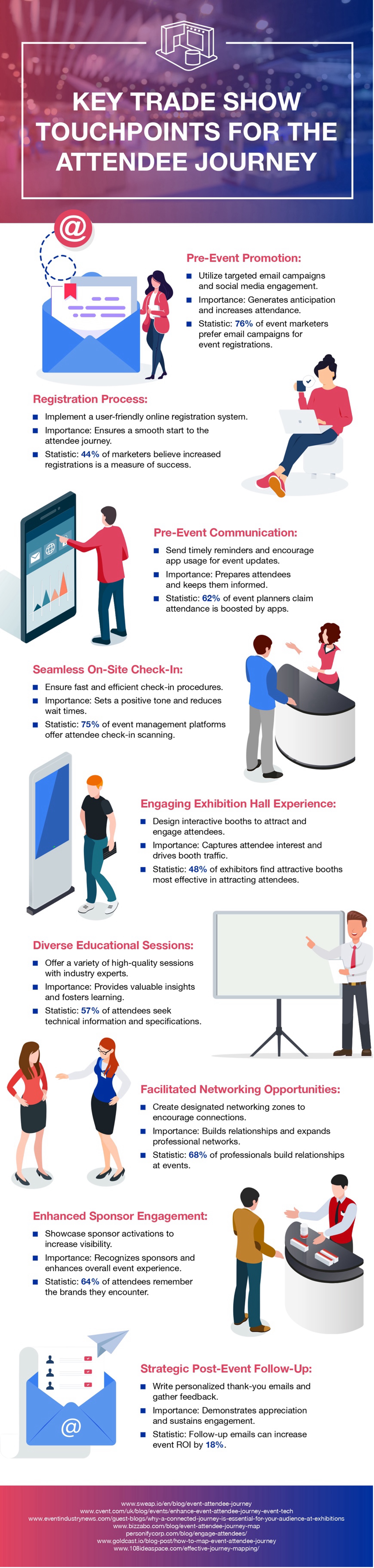
The pre-event stage is your first chance to make an impression. Through marketing, social media, and email invitations, you can introduce your brand to potential attendees, helping them decide to visit your booth before they even arrive at the venue.
To attract visitors, focus on creating a welcoming space with clear branding and an open layout. Good signage helps attendees quickly understand what you offer, while an organised design encourages them to step in and start a conversation.
Effective engagement is about listening more than presenting. While demonstrations and displays are useful, the best interactions come from asking questions to understand an attendee's specific challenges and interests, making the conversation relevant to them.
Your follow-up should be prompt and personal. Send a thank you message that references your conversation, provide any additional information you promised, and suggest a clear next step, like a scheduled call or meeting, to continue the discussion.
By considering every touchpoint, from initial awareness to post-show follow-up, you can create a more cohesive and positive experience. This approach, supported by solutions from companies like Beacon Inside, helps build stronger, more lasting relationships with potential customers.