
November 6, 2025


Sticking with outdated systems may feel comfortable, especially for teams that rely heavily on familiar tools. Yet maintaining legacy platforms can create slowdowns, errors, and long-term expenses that outweigh the temporary convenience of staying put. As businesses expand, the tools that once supported early workflows often struggle to keep pace. Failing to modernize can limit efficiency, weaken decision-making, and reduce a company’s ability to compete.


One of the most immediate costs of clinging to old systems is reduced productivity. Legacy platforms often require manual processes, duplicate data entry, or workarounds that consume hours of staff time. What seems like a small delay becomes a significant financial drain when multiplied across departments, projects, and reporting cycles.
Aging systems also tend to slow down as data volume increases. Load times grow, searches take longer, and employees wait for processing that should be instantaneous. These everyday inefficiencies reduce output, frustrate teams, and create workflow bottlenecks that affect customer service and internal operations.
The longer a business relies on outdated software, the higher its exposure to security threats. Older systems often lack modern encryption, multi-factor authentication, and automated monitoring features. Cybercriminals frequently target legacy technology because vulnerabilities are well documented and rarely fixed.
Data accuracy is another concern. Without centralized records or reliable validation rules, businesses risk making decisions with incomplete or outdated information. Growing companies may struggle with inconsistent reporting or disorganized data structures. Some organizations attempt to compensate by implementing security master data tools or manual checklists, but these temporary fixes rarely solve the underlying problem of aging infrastructure.
System failures carry a heavy price as well. Hardware breakdowns or software crashes can lead to downtime, lost revenue, and costly emergency repairs. In competitive industries, even short interruptions may affect customer loyalty or contract fulfillment.
Legacy systems are expensive to maintain because vendors often discontinue updates or technical support for older versions. Businesses may rely on specialized IT staff or outside contractors who can troubleshoot technology that newer professionals no longer train on.
Repairing outdated infrastructure also becomes more expensive as replacement parts or compatible integrations become harder to find. Workarounds that keep old systems running add complexity and risk, creating hidden maintenance layers that drain budgets year after year.
Modern businesses require speed, adaptability, and the ability to scale. Outdated systems hold companies back from adopting new tools, integrating with partner platforms, or offering digital features customers expect.
When technology limits innovation, growth slows. Companies may struggle to expand into new markets, launch new services, or analyze data quickly enough to seize emerging opportunities. Legacy platforms can turn expansion efforts into technical puzzles rather than strategic initiatives.
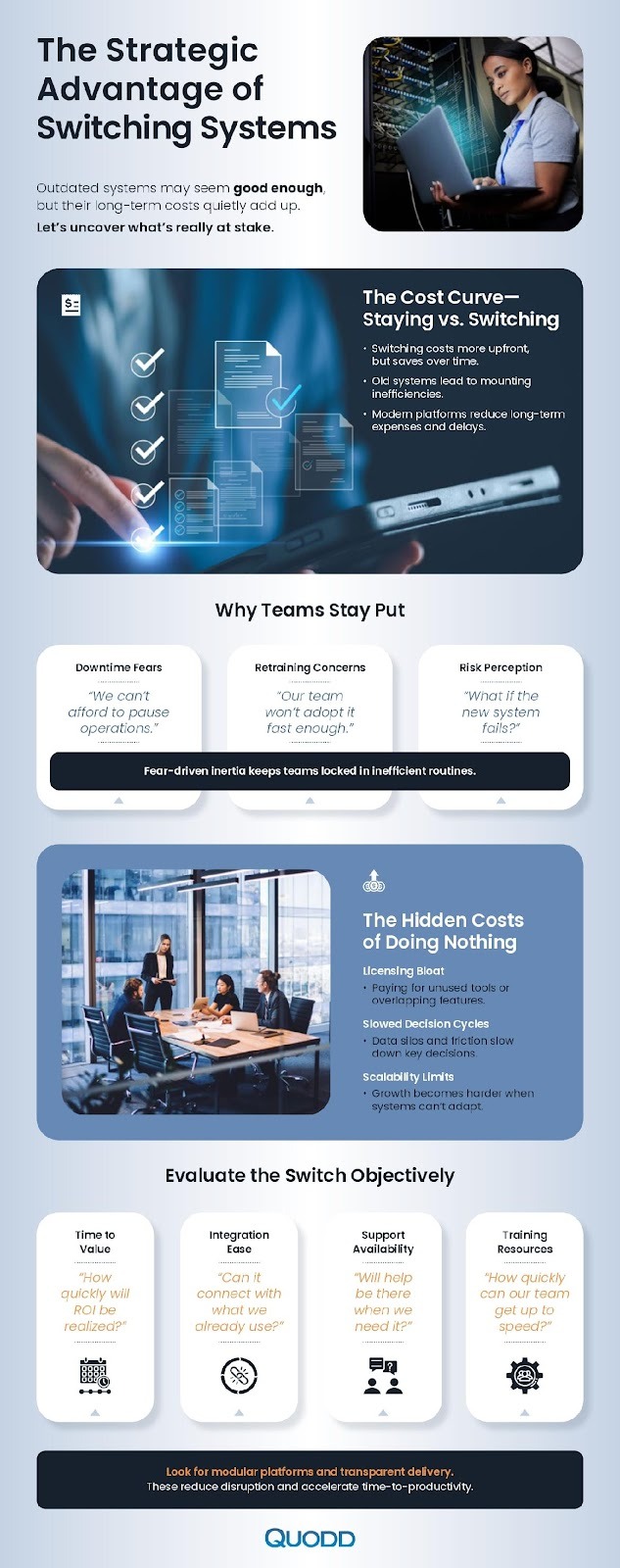
Modernizing systems requires investment, planning, and temporary adjustment. Yet the cost of remaining with outdated platforms grows louder each year. Businesses that embrace updated tools position themselves for stronger security, while those that stay behind risk paying far more in the long run. For more information, look over the infographic below.
Old software often requires manual data entry and clunky workarounds. As your data grows, these systems slow down, causing delays and frustrating your team, which directly impacts their output and efficiency.
Yes, they are a significant risk. Older platforms often lack modern security features like advanced encryption and are prime targets for cybercriminals who exploit known weaknesses. This leaves your business data vulnerable.
While there is an initial investment in a new system, maintaining an old one can become more expensive over time. You may face high costs for specialised support, emergency repairs, and lost revenue from downtime, which often exceed the price of an upgrade.
Legacy platforms can be a major roadblock to growth. They often cannot integrate with modern tools or partner platforms, making it difficult to launch new services, expand into new markets, or adapt to changing customer expectations.
The first step is to assess your current workflows and identify the biggest bottlenecks and risks. Understanding where your old systems are failing helps you choose a new solution that directly addresses those problems. Consulting with experts like Beacon Inside can provide a clear path forward.